
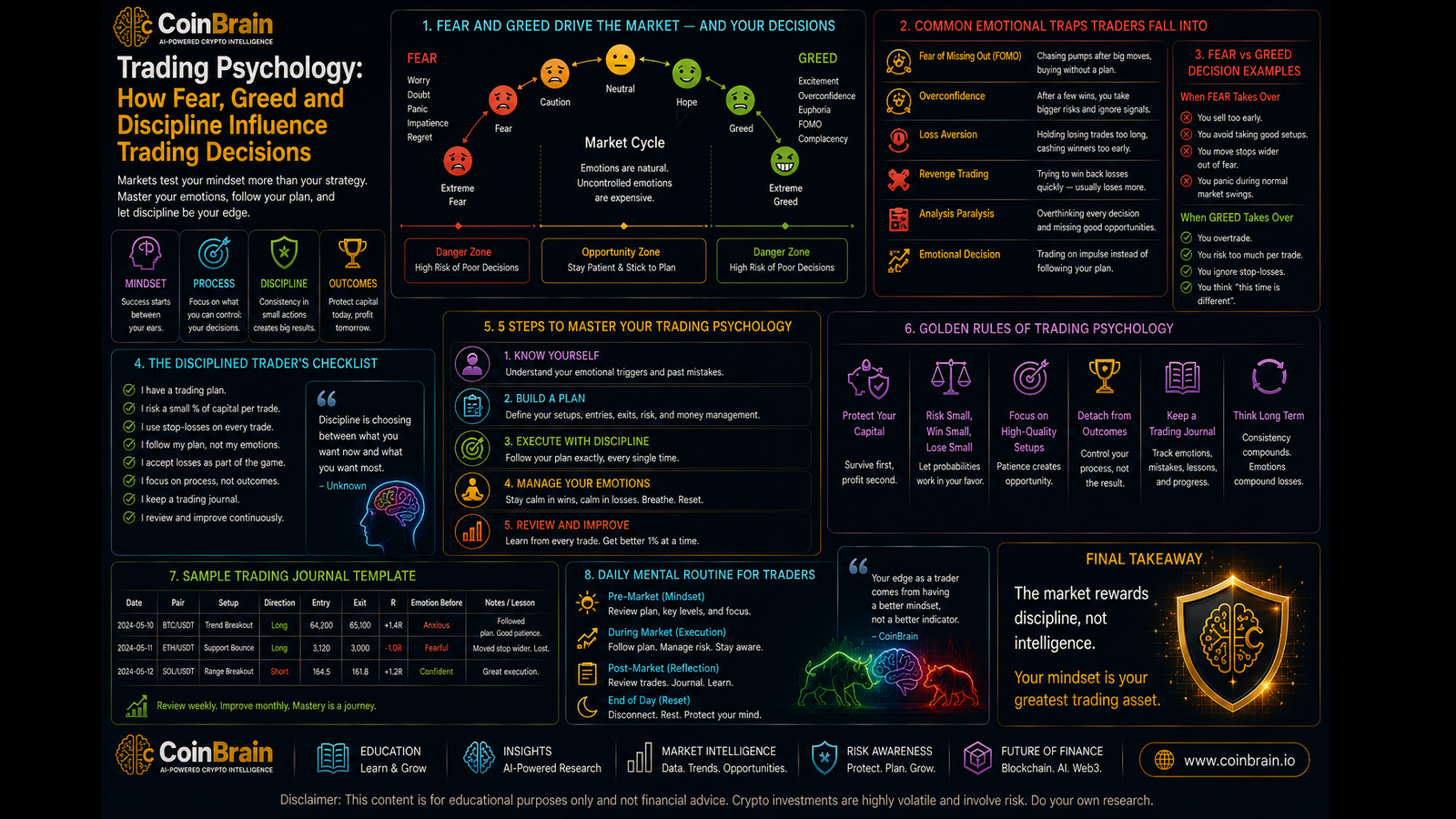

Trading Psychology: How Fear, Greed and Discipline Influence Trading Decisions
CoinBrain Research Articles | Learn Trading — Article 08
Updated: August 2026
A trader can understand candlesticks.
They can identify support and resistance.
They can use RSI, MACD, Fibonacci and volume correctly.
They can calculate position size and define a stop-loss.
And they can still lose money because of one factor that no indicator can control:
their own behavior.
Trading is not purely a technical exercise.
It is a decision-making process conducted under uncertainty, financial pressure and rapidly changing emotions.
Fear can cause a trader to exit a good position too early.
Greed can encourage excessive leverage.
Fear of missing out can lead to buying after a large rally.
Loss aversion can turn a small planned loss into a large unplanned one.
Overconfidence can appear after several winning trades.
Revenge trading can appear after a painful loss.
A technically sound trading strategy therefore requires something equally important:
psychological discipline.
The goal is not to eliminate emotion.
That is unrealistic.
The goal is to create a process that reduces the ability of emotion to override:
Analysis + Risk Rules + Position Sizing + Trading Plan
Trading psychology becomes especially important in cryptocurrency because crypto markets are:
- highly volatile
- open 24/7
- heavily influenced by narratives
- widely discussed on social media
- accessible with significant leverage
These characteristics can amplify emotional decision-making.
The central lesson is simple:
A trading strategy can only work if the trader can consistently follow it.
Educational Notice: This article is for educational and research purposes only. It does not constitute financial, investment, psychological or medical advice. Cryptocurrency trading can involve substantial losses. Trading strategies and psychological techniques cannot guarantee profitability.
1. Executive Summary
Trading psychology refers to the emotional, cognitive and behavioral factors that influence trading decisions.
Common psychological influences include:
- fear
- greed
- FOMO
- loss aversion
- overconfidence
- confirmation bias
- anchoring
- revenge trading
- recency bias
- herd behavior
These forces can cause traders to ignore the very rules they designed to protect themselves.
For example:
A trader decides before entry:
Stop-loss = $90
Price falls toward $90.
Emotion says:
“Move the stop. The market will come back.”
The stop becomes:
$85
then:
$80
The original:
controlled loss
becomes:
an uncontrolled loss.
Trading psychology is therefore closely connected to risk management.
A useful framework is:
Plan Before Trade
↓
Define Risk
↓
Execute According to Rules
↓
Observe Emotions
↓
Record Decisions
↓
Review Performance
The objective is to make trading increasingly:
process-driven
rather than:
emotion-driven.
The most important psychological shift is moving from:
“I need this trade to win.”
to:
“I need to execute this trade correctly.”
A good trade can lose.
A bad trade can win.
Over time, professional discipline requires judging decisions by:
process quality
rather than:
one individual outcome.
2. Key Takeaways
1. Trading is probabilistic
No setup is certain.
Accepting uncertainty reduces the emotional need to be right every time.
2. Fear and greed influence decisions
Both can cause traders to abandon their plans.
3. FOMO often appears after prices have already moved significantly
Fear of missing out can lead to poor entries and oversized positions.
4. Loss aversion makes losses feel disproportionately painful
This can cause traders to avoid closing invalidated positions.
5. Winning trades can also create psychological risk
A winning streak can produce overconfidence and excessive risk-taking.
6. Revenge trading is dangerous
Increasing risk after a loss in an attempt to recover quickly can compound damage.
7. A trading plan reduces emotional decision-making
Important decisions should ideally be made before the trade begins.
8. Journaling creates accountability
A trading journal helps separate strategy problems from behavioral problems.
9. Process matters more than one outcome
A disciplined losing trade can be better than an undisciplined winning trade.
10. Position sizing influences psychology
A position that is too large becomes emotionally difficult to manage.
11. Constant chart watching can worsen decision quality
More information does not always create better decisions.
12. Discipline is a repeatable behavior—not a personality trait
It can be strengthened through systems, routines and review.
3. Market Overview
Why Trading Creates Strong Emotions
Trading combines several psychologically powerful elements:
Money
Uncertainty
Immediate Feedback
Potential Reward
Potential Loss
Prices change continuously.
The trader’s account value changes with them.
This creates an environment where emotional responses can become intense.
Crypto Amplifies the Effect
Crypto adds:
24/7 Markets
There is always another candle.
Always another price move.
Always another potential trade.
Extreme Volatility
A token can move dramatically within minutes.
Social Media
Traders constantly see:
- predictions
- profits
- screenshots
- narratives
Leverage
Small price moves can create large financial consequences.
Rapid Narratives
Markets can suddenly focus on:
- AI
- memecoins
- RWAs
- Layer 1s
- DeFi
This creates pressure to chase whatever appears to be working today.
The Emotional Market Cycle
Investor psychology often follows price.
Price Begins Rising
Optimism
Rally Strengthens
Excitement
Large Gains
Confidence
Extreme Rally
Euphoria
Initial Decline
Denial
Larger Decline
Fear
Severe Losses
Panic
Capitulation
Despair
Market Stabilizes
Disbelief
Then the process can begin again.
Understanding this cycle can help traders recognize that emotions often become most extreme near important market turning points.
4. Technical Deep Dive
Fear
Fear appears when traders focus heavily on potential loss.
It can create several behaviors.
Exiting Too Early
A trader enters according to plan.
Price moves slightly against them.
Nothing has invalidated the setup.
But fear causes an early exit.
Later, price moves toward the original target.
Failing to Enter
A valid setup appears.
The trader is afraid because the previous trade lost.
They skip the trade.
The strategy becomes inconsistent.
Panic Selling
During severe market declines, fear can cause investors to sell without reassessing fundamentals or market structure.
Greed
Greed usually appears when potential reward dominates thinking.
Examples:
Oversizing
Normal position:
$1,000
Trader becomes highly confident:
$10,000 position
One losing trade now has disproportionate consequences.
Increasing Leverage
The trader thinks:
“If 5× works, 20× will make four times as much.”
Risk rises dramatically.
Refusing to Take Planned Profits
Target reached.
Trader says:
“Maybe it can go another 50%.”
Price reverses.
A profitable trade can turn into a loss.
FOMO — Fear of Missing Out
Suppose a token rises:
+20%
then:
+50%
then:
+100%.
The trader initially ignored it.
Now everyone is discussing it.
Emotion says:
“If I don’t buy now, I will miss the opportunity.”
The decision is no longer based on:
- support
- market structure
- valuation
- risk/reward
It is based on:
social pressure + recent price performance.
This is FOMO.
Loss Aversion
Behavioral finance research has long shown that people generally experience losses more strongly than equivalent gains.
In trading, this can create:
small winners
and:
large losers.
Why?
When a trade becomes profitable:
“Take the profit before it disappears.”
When a trade loses:
“Wait. Maybe it will recover.”
This produces exactly the wrong asymmetry.
Confirmation Bias
A trader buys Bitcoin.
Now they search for:
- bullish charts
- bullish news
- bullish analysts
while ignoring bearish evidence.
The trader is no longer researching.
They are seeking:
confirmation.
A useful discipline is to ask:
What evidence would prove my thesis wrong?
Anchoring
Suppose a token once traded at:
$100
and now trades at:
$20.
The trader says:
“It is 80% cheaper.”
But the previous $100 price may no longer be economically relevant.
Perhaps:
- token supply increased
- adoption failed
- competition improved
- the narrative disappeared
Anchoring causes investors to attach too much importance to a previous reference point.
Recency Bias
Recent events feel more important than older evidence.
After five winning trades:
“This strategy always works.”
After five losses:
“The strategy is broken.”
Neither conclusion may be valid.
A larger statistical sample is required.
Overconfidence
Success can become dangerous.
A trader experiences:
five consecutive winners.
They conclude:
“I understand this market now.”
Position size increases.
Risk rules weaken.
The sixth trade fails.
The oversized loss removes much of the previous profit.
Revenge Trading
A trader loses:
$500.
Instead of accepting the planned loss, they immediately enter a larger position.
Objective:
Recover $500 quickly.
This trade is no longer based on analysis.
It is based on emotion.
If that trade also fails, the process can accelerate.
Sunk-Cost Fallacy
A trader has already lost:
40%
on a position.
They continue holding because:
“I have already lost too much to sell now.”
But the correct question is:
Would I buy this position today at its current price?
Past losses should not determine future capital allocation by themselves.
Outcome Bias
Suppose Trader A follows every rule.
The trade loses:
−1R.
Trader B ignores risk management, buys randomly and makes:
+5R.
Who made the better decision?
Trader A.
One outcome does not establish process quality.
This is:
Outcome Bias.
Good decisions can produce bad short-term outcomes.
Bad decisions can produce good short-term outcomes.
5. Current Industry Landscape
Trading psychology has become increasingly important as financial markets have become easier to access.
Crypto accelerates this trend.
Mobile Trading
A trader can open a leveraged position from a smartphone within seconds.
Reduced friction has advantages.
It also makes impulsive trading easier.
Social Trading
Markets are increasingly influenced by:
- X
- Telegram
- Discord
- YouTube
- TikTok
A trader may see thousands of opinions before making one decision.
This can amplify:
- FOMO
- herd behavior
- confirmation bias
Profit Screenshots
Social media frequently displays:
winning trades.
It rarely provides an equally representative sample of:
losing trades.
This can create unrealistic expectations.
Influencer Risk
A trader may buy because:
“This analyst has been right several times.”
This transfers decision responsibility to another person.
Even a strong analyst can be wrong.
Every trader still needs independent risk management.
Copy Trading
Platforms increasingly offer automated copying of other traders.
This can appear convenient.
But the user must still understand:
- drawdown
- leverage
- strategy
- historical sample
- risk concentration
Copying someone else’s trades does not eliminate trading psychology.
It can simply outsource the decisions.
6. Institutional Activity
Professional trading organizations attempt to reduce psychological errors through systems and controls.
They do not rely purely on individual discipline.
Predefined Risk Limits
A trader may have:
- maximum position size
- daily loss limit
- portfolio exposure limit
These rules reduce the ability of emotion to create uncontrolled risk.
Independent Risk Management
Large trading organizations often separate:
traders
from:
risk-management oversight.
A trader may want to increase exposure.
The risk system can prevent it.
This demonstrates an important principle:
Good systems compensate for imperfect human behavior.
Systematic Trading
Quantitative strategies reduce discretionary emotional decisions by defining rules in advance.
For example:
If conditions A + B + C occur → execute according to predefined risk.
This does not eliminate model risk.
But it reduces some behavioral inconsistency.
Post-Trade Review
Professional trading desks analyze:
- execution
- slippage
- risk
- strategy adherence
The question is not only:
“Did we make money?”
but:
“Did we execute the process correctly?”
Retail traders can adopt the same principle.
Daily Loss Limits
Some professional traders operate with rules such as:
Maximum acceptable loss per day.
Once reached:
trading stops.
This prevents emotional escalation after a difficult session.
7. Market Data & Metrics
Psychology appears subjective, but behavior can still be measured.
1. Win Rate
Track:
Winning Trades ÷ Total Trades
But do not obsess over win rate alone.
2. Average Win
How large is the average successful trade?
3. Average Loss
How large is the average losing trade?
If:
Average Loss > Planned Loss
the trader may be violating stops.
4. R-Multiple
Track each trade in terms of:
R.
This allows consistent comparison.
5. Rule-Adherence Rate
After each trade, record:
Did I follow my plan?
Yes / No.
Suppose:
Strategy expectancy is positive.
But only:
60%
of trades follow the rules.
The problem may be behavioral rather than technical.
6. Unplanned Trades
Track how many trades occurred without a defined setup.
These frequently reveal:
- boredom
- FOMO
- revenge trading
7. Stop Movement
Record each time a stop is moved farther away.
This can reveal loss-aversion behavior.
8. Position-Size Deviations
Planned risk:
1%.
Actual risk:
3%.
Why?
If this occurs primarily after wins, overconfidence may be influencing behavior.
9. Trading Frequency
An unexpected increase in trade frequency can indicate:
- overconfidence
- boredom
- revenge trading
10. Maximum Daily Loss
Track whether losses cluster during emotionally difficult sessions.
11. Time of Day
Some traders perform worse when:
- tired
- distracted
- trading late
Recording this can reveal patterns.
12. Emotional State
A simple journal could record:
Calm
Fearful
Excited
Angry
FOMO
Over time, traders may discover relationships between emotional state and performance.
8. Real-World Use Cases
Use Case 1 — FOMO Breakout
Bitcoin breaks resistance and rises:
8%
within hours.
Trader sees social-media excitement.
They buy without:
- waiting for pullback
- defining stop
- calculating risk
Price retraces.
The problem was not necessarily buying Bitcoin.
The problem was:
emotion replaced process.
Use Case 2 — Moving the Stop
Entry:
$100
Stop:
$95
Price reaches:
$95.50
Trader moves stop:
$90
because they do not want to accept the loss.
This is loss aversion.
Use Case 3 — Taking Profit Too Early
Plan:
Entry:
$100
Stop:
$95
Target:
$115
Price reaches:
$104
Trader becomes afraid profit will disappear.
They exit.
The strategy originally targeted:
3R
but repeatedly captures less than:
1R.
Over time, this can destroy strategy expectancy.
Use Case 4 — Overconfidence
Trader wins:
six trades consecutively.
Normal risk:
1%.
Next trade:
5%.
It loses.
The oversized loss damages weeks of disciplined performance.
Use Case 5 — Revenge Trading
First trade:
−1R
Trader immediately enters an unplanned trade:
−2R
Then increases leverage:
−4R
One normal losing trade becomes:
−7R.
The original strategy did not create the large drawdown.
Psychology did.
Use Case 6 — Boredom Trading
No valid setups exist.
Trader thinks:
“I should be doing something.”
They enter a mediocre trade.
Professional trading sometimes requires:
doing nothing.
Use Case 7 — Following the Crowd
Everyone online is bullish.
A disciplined trader asks:
What does my process say?
This does not mean being deliberately contrarian.
It means making independent decisions.
9. Risks & Challenges
Psychological discipline itself contains challenges.
1. Emotions Cannot Be Eliminated
Trying to become completely emotionless is unrealistic.
The goal is:
emotion awareness + process control.
2. Excessive Position Size Amplifies Emotion
A trader who cannot sleep because of a position may be carrying too much risk.
Position sizing is therefore both:
financial
and:
psychological
risk management.
3. Social Media Constantly Creates New Stimuli
Every hour can produce:
- new narrative
- new token
- new prediction
This can undermine long-term discipline.
4. Profit Can Reinforce Bad Behavior
Suppose a trader ignores every rule and makes money.
The positive outcome can strengthen dangerous behavior.
This is why journals should grade:
decision quality
separately from:
profit.
5. Losses Can Damage Confidence
A normal losing streak can make a trader abandon a valid strategy.
Statistical understanding helps.
6. Overtrading
More trades do not necessarily create more profit.
Every trade introduces:
- risk
- fees
- slippage
7. Perfectionism
A trader may expect:
every setup to work.
This creates frustration when normal losses occur.
8. Comparing Performance with Others
One trader shows:
+300%.
You earned:
+20%.
Without knowing their:
- leverage
- drawdown
- starting capital
- risk
the comparison is meaningless.
9. Changing Strategies Constantly
After several losses:
RSI strategy → MACD strategy → scalping → futures → new indicator
The trader never collects enough evidence to evaluate one consistent approach.
10. Excessive Screen Time
Watching every tick can increase emotional reactions.
Longer-term strategies generally do not require constant monitoring.
11. Leverage Amplifies Psychological Pressure
A 1% market move becomes much more emotionally significant when leverage makes it a large account-level move.
12. Ignoring Personal Financial Stress
Trading money needed for essential expenses creates enormous emotional pressure and can degrade decision quality.
10. Future Outlook: 3–5 Years
Trading psychology will increasingly intersect with AI and behavioral analytics.
Behavioral Trading Assistants
Platforms may identify patterns such as:
“Your average position size increases by 80% after two consecutive winning trades.”
This could reveal overconfidence.
Revenge-Trading Detection
A system could observe:
loss
↓
immediate larger trade
and warn:
“Your next trade size significantly exceeds your normal risk after a recent loss.”
FOMO Detection
If a user repeatedly enters assets after extreme short-term price increases, a platform could flag the behavioral pattern.
Automated Risk Limits
Users may increasingly set:
- maximum daily loss
- maximum leverage
- maximum trades per day
which cannot easily be overridden during emotional moments.
AI Trading Journals
Instead of manually reviewing dozens of trades, AI could summarize:
- recurring mistakes
- best setups
- emotional triggers
- strategy adherence
Personalized Coaching
Future systems could distinguish between:
strategy problem
and:
execution problem.
For example:
“Your planned setups have positive historical expectancy, but stop-loss discipline has materially reduced realized performance.”
That would be extremely valuable.
Less Focus on Signals, More Focus on Process
As AI makes trading indicators widely accessible, information advantages from simple indicators may decline.
The ability to:
- manage risk
- execute consistently
- control behavior
may become even more important.
11. Investment & Trading Implications
A practical psychological framework can be integrated into every trade.
Step 1 — Trade Only Defined Setups
Before the session, define what qualifies as a trade.
For example:
Support/Resistance
Candlestick Confirmation
Momentum
Volume
Acceptable Risk-to-Reward
If the criteria do not appear:
no trade.
Step 2 — Define Risk Before Entry
Know:
- entry
- stop
- target
- position size
before money is at risk.
This removes several decisions from the emotional phase of the trade.
Step 3 — Write Down the Thesis
One or two sentences are enough.
Example:
“Bitcoin retested former resistance as support, produced bullish rejection and volume expanded during recovery.”
Now you know why the trade exists.
Step 4 — Write Down Invalidation
Example:
“A daily close below $89,000 invalidates the setup.”
This prevents the thesis from changing simply because the trade is losing.
Step 5 — Accept the Planned Loss
Before entry, ask:
Am I genuinely willing to lose the planned amount?
If not:
reduce position size.
Step 6 — Avoid Constantly Changing the Plan
Once the position is active, do not reinterpret every candle emotionally.
Only change the plan when:
new information genuinely changes the thesis.
Step 7 — Avoid Watching Profit/Loss Constantly
Watching:
+$50 → +$30 → +$80 → +$40
can trigger unnecessary emotional decisions.
Focus on:
market structure
rather than:
account fluctuations.
Step 8 — Create a Daily Loss Limit
A trader may decide beforehand that after a predefined loss threshold:
trading stops for the session.
The specific amount is personal.
The principle is to prevent:
emotional escalation.
Step 9 — Create a Maximum Trade Count
If your strategy normally produces:
two high-quality setups per day
but you suddenly make:
12 trades
something may be wrong.
Step 10 — Keep a Trading Journal
Record:
- setup
- entry
- stop
- target
- result
- reason
- emotional state
- rule adherence
Step 11 — Review Weekly, Not Emotionally
After a loss:
do not immediately redesign the strategy.
Review a meaningful sample of trades.
Step 12 — Grade Process
A useful grading system:
A Trade
Followed every rule.
B Trade
Minor execution issue.
C Trade
Significant deviation.
F Trade
Purely emotional or unplanned.
A losing:
A Trade
can be acceptable.
A profitable:
F Trade
should still concern you.
A Complete Beginner Example
Suppose Ahmed sees Bitcoin approaching:
$100,000 resistance.
Bitcoin breaks above it.
Social media becomes extremely bullish.
Ahmed feels:
FOMO.
His normal risk:
1%.
He considers risking:
5%
because:
“This breakout looks obvious.”
Before entering, he follows his checklist.
Market Structure
Breakout confirmed?
Yes.
Volume
Above average?
Yes.
RSI
Strong momentum?
Yes, but extended.
MACD
Bullish?
Yes.
Entry
Price has already moved significantly beyond ideal breakout entry.
Risk-to-Reward
Poor because nearest logical stop is far away.
Emotional State
FOMO.
Ahmed decides:
No trade.
Bitcoin continues another 5%.
Did Ahmed make the wrong decision?
No.
He followed his process.
Later, Bitcoin retraces toward:
$100,000.
Former resistance begins acting as support.
A bullish candle forms.
Ahmed now has:
- better entry
- clearer invalidation
- improved risk-to-reward
He enters with normal risk.
The crucial psychological lesson is:
Missing a trade is not a trading loss.
Protecting process quality is more important than participating in every price move.
Example: Good Loss vs Bad Win
Trade A
Perfect setup.
Risk:
1R
Rules followed.
Unexpected news causes stop-out:
−1R
This is:
a good trade with a losing outcome.
Trade B
No setup.
Trader uses excessive leverage.
Price unexpectedly rises.
Profit:
+5R
This is:
a bad trade with a winning outcome.
If the trader judges only by profit:
Trade B appears better.
If the trader judges by process:
Trade A was superior.
Repeated Trade B behavior can eventually create catastrophic losses.
The CoinBrain Trading Psychology Checklist
Before entering a trade, ask:
Setup
- Does this match my trading plan?
Motivation
- Why am I entering?
FOMO
- Am I chasing because price already moved?
Risk
- Is position size normal?
Loss
- Am I comfortable accepting the planned loss?
Thesis
- Why should this trade work?
Invalidation
- What proves it wrong?
Emotion
- Am I calm, fearful, greedy or angry?
Recent Results
- Am I reacting to my previous trade?
Social Influence
- Would I make this trade if nobody online were discussing it?
Process
- Am I following rules or improvising?
If several answers indicate emotional pressure:
doing nothing may be the highest-quality trading decision.
Building a Trading Routine
A simple routine can improve discipline.
Before Trading
Review:
- market structure
- major levels
- planned setups
- maximum risk
During Trading
Follow:
- entry criteria
- risk limits
- stop rules
After Trading
Record:
- result
- execution
- emotional state
Weekly
Review:
- expectancy
- repeated mistakes
- best setups
- rule adherence
This transforms trading from:
a series of emotional bets
into:
a measurable decision process.
Business Implications
Trading psychology represents a major opportunity for future trading technology.
Most trading platforms optimize:
execution speed.
They compete on:
- lower fees
- leverage
- more markets
- faster orders
But a platform genuinely focused on improving trader outcomes could also provide:
behavioral risk management.
For example:
“You have opened four positions within 20 minutes after a large loss.”
Or:
“This position is three times larger than your 30-day average.”
Or:
“You have moved your stop farther from entry twice.”
Or:
“Your strongest historical results occur when you trade fewer than three setups per day.”
This type of technology would move trading platforms from:
execution tools
toward:
decision-quality systems.
AI could be particularly useful here because it can identify behavioral patterns across hundreds of previous decisions that individual traders may overlook.
12. Final Analysis
The final skill in our first Learn Trading series is not another indicator.
It is:
discipline.
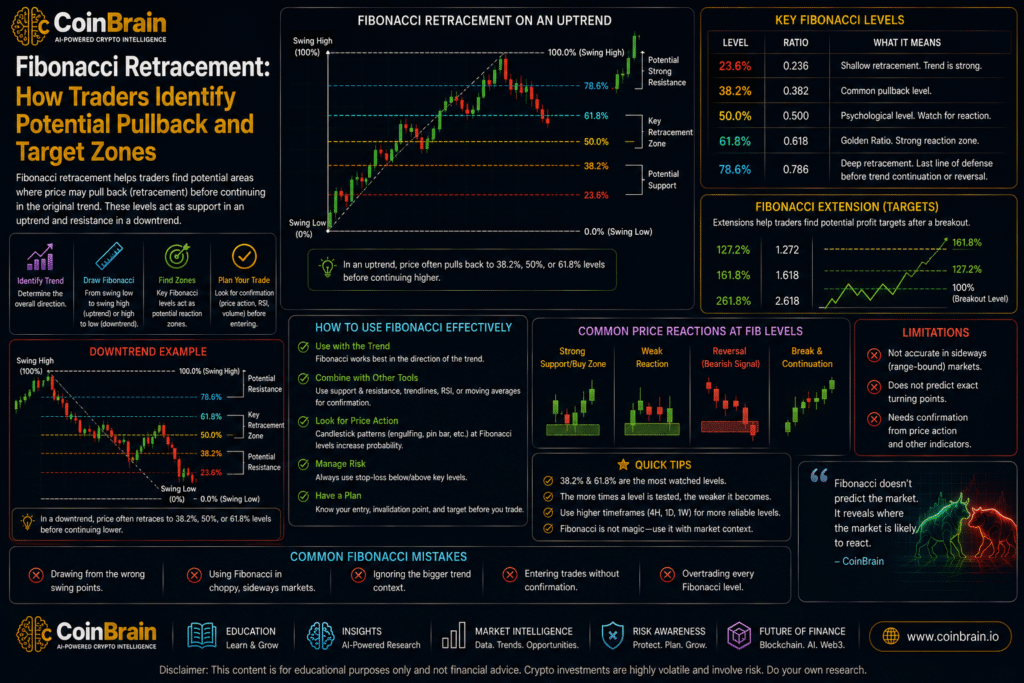
Candlesticks can be learned.
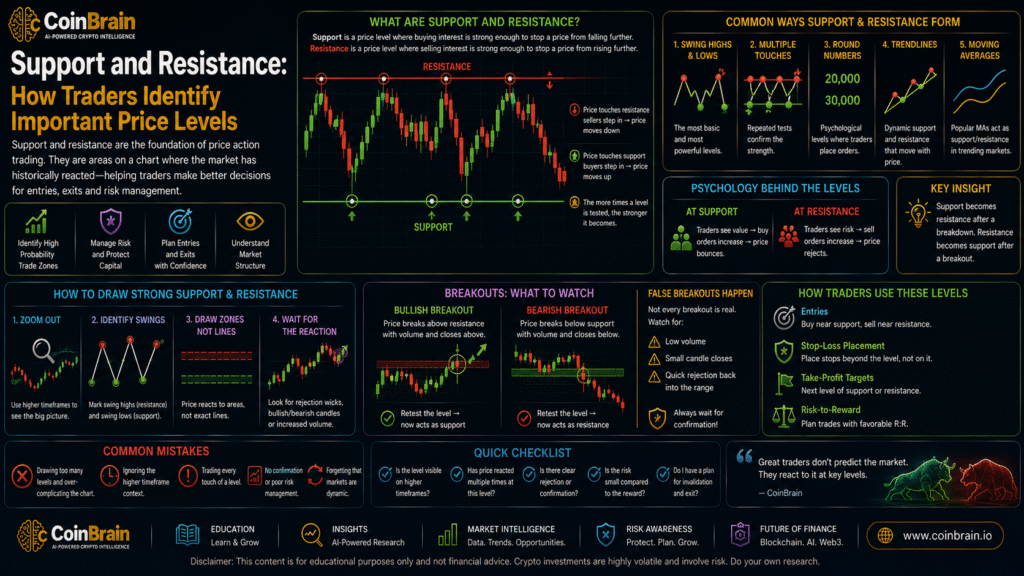
Support and resistance can be drawn.
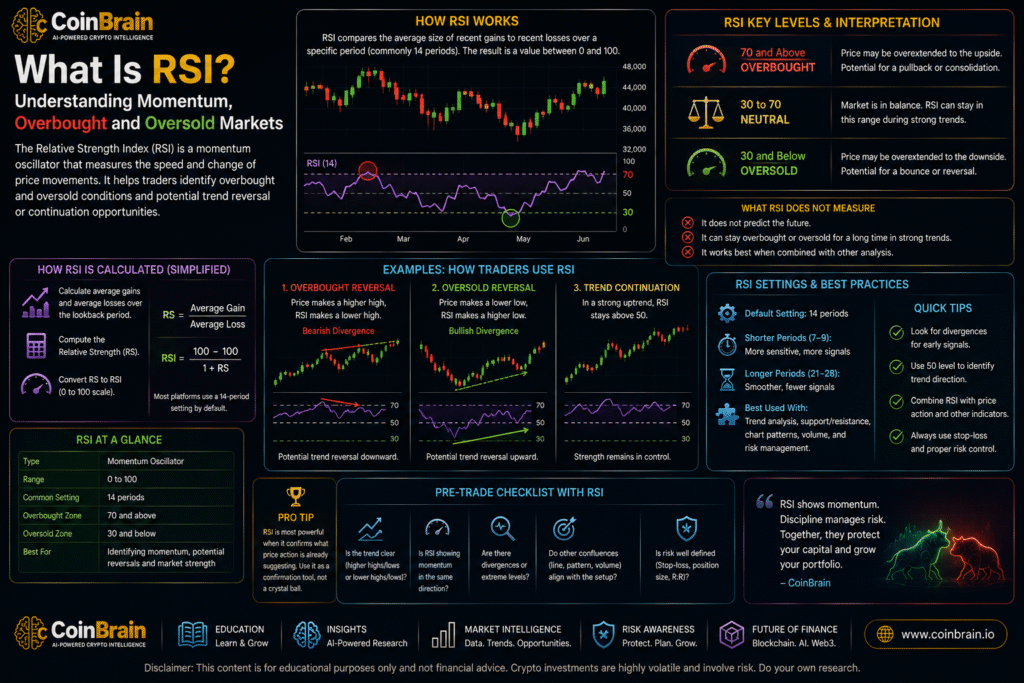
RSI can be calculated.
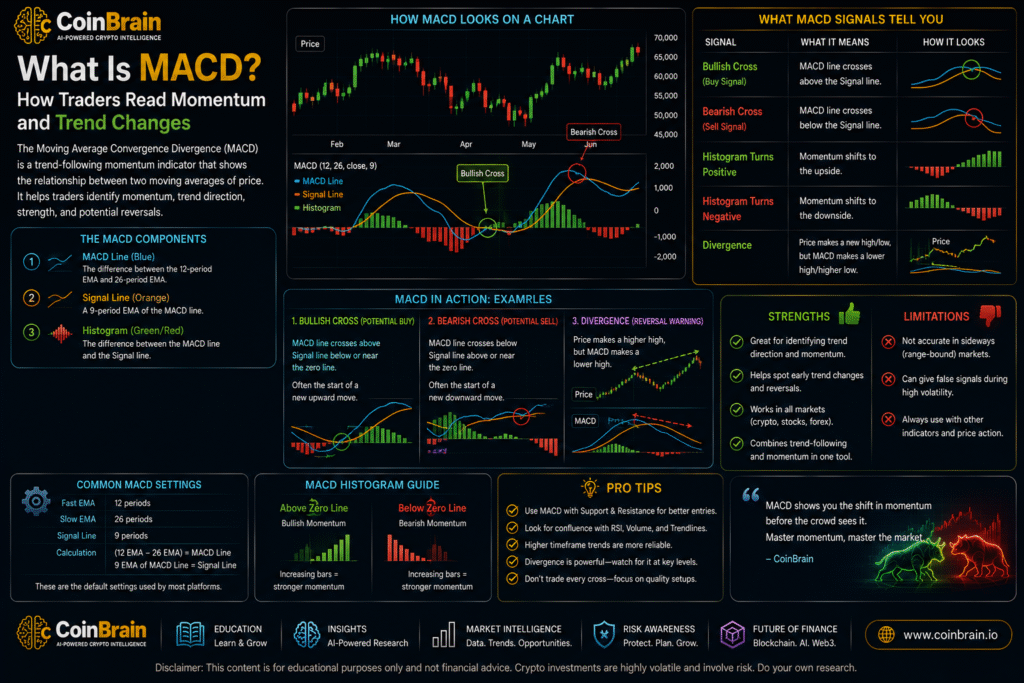
MACD can be interpreted.
Fibonacci levels can be measured.
Volume can be analyzed.
Risk can be quantified.
But none of these matters if the trader abandons the process when emotions become intense.
Trading psychology therefore connects every other trading skill.
Fear can override:
a valid entry.
Greed can override:
position sizing.
Loss aversion can override:
a stop-loss.
FOMO can override:
risk-to-reward.
Overconfidence can override:
portfolio limits.
Revenge can override:
the entire trading plan.
This brings the complete Learn Trading framework together.
Article 01 — Candlesticks
How is price behaving?
Article 02 — Support & Resistance
Where is price reacting?
Article 03 — RSI
How strong is momentum?
Article 04 — MACD
How are trend and momentum evolving?
Article 05 — Fibonacci
Where might the pullback react?
Article 06 — Volume
How much participation supports the move?
Article 07 — Risk Management
How much can we lose if we are wrong?
Article 08 — Trading Psychology
Can we actually follow the plan when money and emotions are involved?
The final question determines whether all the previous knowledge can be applied consistently.
The most important shift a trader can make is from:
“Did I make money?”
to:
“Did I execute a high-quality decision?”
Over one trade, luck matters enormously.
Over hundreds of decisions, process matters much more.
The goal is therefore not to become emotionless.
It is to become:
structured.
Plan before entering.
Define risk.
Accept uncertainty.
Execute consistently.
Review objectively.
Improve gradually.
And remember:
You cannot control the market. You can control the quality of the decisions you make within it.
That is the foundation of disciplined trading.
13. References & Further Reading
Daniel Kahneman
Thinking, Fast and Slow
A foundational exploration of cognitive biases, decision-making under uncertainty, loss aversion and behavioral economics.
Daniel Kahneman & Amos Tversky
Prospect Theory
Foundational research explaining how people evaluate gains and losses differently and why loss aversion influences financial decisions.
CFA Institute
Behavioral Finance
Professional educational material covering investor biases, decision-making, overconfidence, loss aversion, anchoring and portfolio behavior.
CMT Association
Trading Systems, Discipline and Psychology
Technical-analysis education covering trading discipline, system execution and behavioral aspects of market participation.
CME Group
Trading Psychology and Risk Management Education
Educational resources addressing trading preparation, discipline, risk and derivatives-market decision-making.
Concepts for Further Study
Readers progressing beyond the fundamentals should investigate:
- behavioral finance
- trading psychology
- loss aversion
- FOMO
- overconfidence
- confirmation bias
- anchoring
- recency bias
- revenge trading
- herd behavior
- sunk-cost fallacy
- outcome bias
- trading discipline
- decision journaling
- trading expectancy
- process vs outcome
- emotional risk
- trading routines
- rule adherence
- performance review
CoinBrain Learn Trading
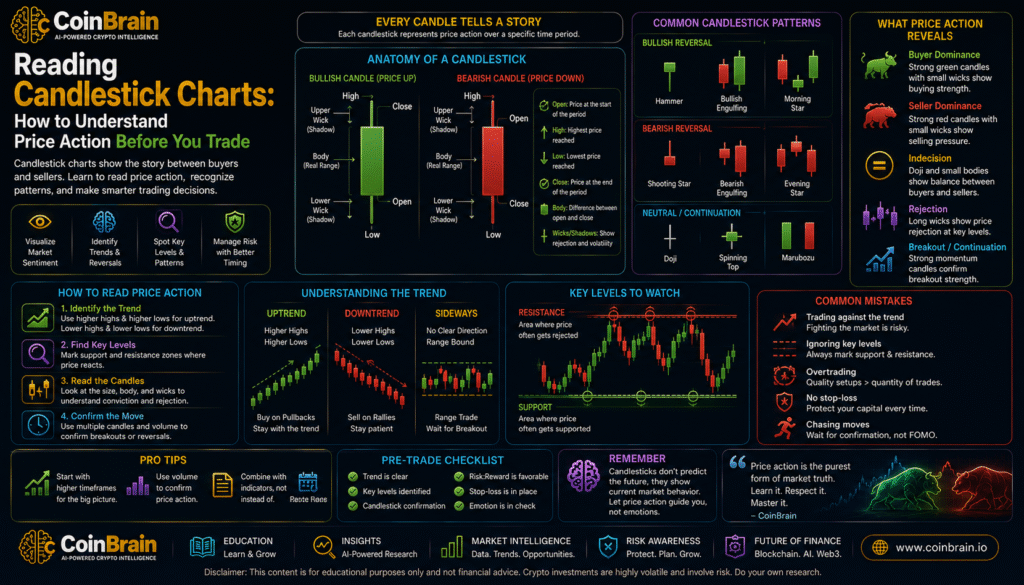
Article 01 — Reading Candlestick Charts: How to Understand Price Action Before You Trade
Article 02 — Support and Resistance: How Traders Identify Important Price Levels
Article 03 — What Is RSI? Understanding Momentum, Overbought and Oversold Markets
Article 04 — What Is MACD? How Traders Read Momentum and Trend Changes
Article 05 — Fibonacci Retracement: How Traders Identify Potential Pullback and Target Zones
Article 06 — Volume Analysis: How Trading Activity Can Confirm—or Question—Price Moves
Article 07 — Trading Risk Management: Position Sizing, Stop-Losses and Protecting Your Capital
Article 08 — Trading Psychology: How Fear, Greed and Discipline Influence Trading Decisions
CoinBrain Learn Trading — Foundation Series Complete
Together, these eight articles provide a beginner framework for moving from:
reading a chart
to:
building and managing a structured trade thesis.
CoinBrain Research Articles
Research. Understand. Decide.
Leave a Reply
You must be logged in to post a comment.