
From Programmer to AI-Native Engineer
The Evolution of Software Engineering and Why the Future Demands More Than Coding
Every decade changes the tools engineers use. Once in a generation, technology changes what it means to be an engineer.
Introduction
If you had asked someone in the early 1990s what a software engineer did, the answer would have been simple:
“They write computer programs.”
Today, that answer is no longer sufficient.
Modern engineers design cloud platforms, build distributed systems, integrate hundreds of services, analyze massive amounts of data, secure enterprise infrastructure, deploy Artificial Intelligence, and increasingly collaborate with AI systems that generate code, documentation, and software designs.
Software engineering has evolved dramatically over the last four decades.
Understanding this evolution is essential—not only to appreciate where technology is today, but to prepare for where it is heading next.
The goal of this article is not simply to look at history.
It is to understand why tomorrow’s engineers must think differently from yesterday’s developers.
The First Generation: The Programmer
During the 1980s and early 1990s, software development was primarily about writing programs.
Typical responsibilities included:
- Writing code
- Fixing bugs
- Compiling applications
- Managing files
- Delivering executable software
Applications were usually installed on a single computer.
Teams were relatively small.
Programming languages defined careers.
An engineer might proudly identify themselves as:
- A COBOL Programmer
- A C Programmer
- A Pascal Developer
Success depended largely on writing correct code.
The Second Generation: The Software Developer
As the internet expanded during the late 1990s and early 2000s, software became connected.
Applications needed to communicate.
Websites became interactive.
Databases grew rapidly.
Developers now worked with:
- Databases
- Web servers
- APIs
- Authentication
- Business logic
- User interfaces
Programming remained important, but understanding complete applications became equally valuable.
Engineers began thinking beyond individual files.
They started thinking in systems.
The Third Generation: The Software Engineer
By the 2010s, organizations had become digital businesses.
Software was no longer supporting the business.
Software was the business.
Companies needed engineers who could design:
- Scalable systems
- Reliable architectures
- Distributed services
- Secure platforms
- Cloud-native applications
Engineering now included concepts such as:
- Design patterns
- Microservices
- CI/CD
- Containers
- Monitoring
- Automated testing
- Scalability
The profession became less about writing code and more about engineering reliable systems.
The Fourth Generation: The Cloud Engineer
Cloud computing fundamentally changed software delivery.
Instead of purchasing servers, organizations could provision infrastructure within minutes.
Engineers became responsible for:
- Cloud architecture
- Infrastructure as Code
- Containers
- Kubernetes
- Continuous deployment
- High availability
- Disaster recovery
The boundaries between software development and infrastructure became increasingly blurred.
Engineers now needed operational knowledge in addition to programming skills.
The Fifth Generation: The Data Engineer
As organizations collected enormous amounts of information, data became one of their most valuable assets.
Businesses wanted answers.
Engineers built pipelines that transformed raw information into meaningful insights.
Responsibilities expanded to include:
- Data modeling
- ETL pipelines
- Data warehouses
- Data lakes
- Streaming platforms
- Analytics
- Business intelligence
The ability to understand data became as valuable as writing software.
Organizations discovered an important truth:
Better decisions require better data.
The Sixth Generation: The AI Engineer
The emergence of Large Language Models fundamentally changed software development.
For the first time, software could understand language, summarize information, generate code, analyze documents, and assist with reasoning.
AI Engineers began building systems that combined:
- Foundation models
- Prompt engineering
- Embeddings
- Vector databases
- Retrieval-Augmented Generation (RAG)
- AI Agents
- Model evaluation
- Responsible AI
Unlike previous generations, engineers no longer programmed every behavior explicitly.
Instead, they designed intelligent systems that collaborated with AI models.
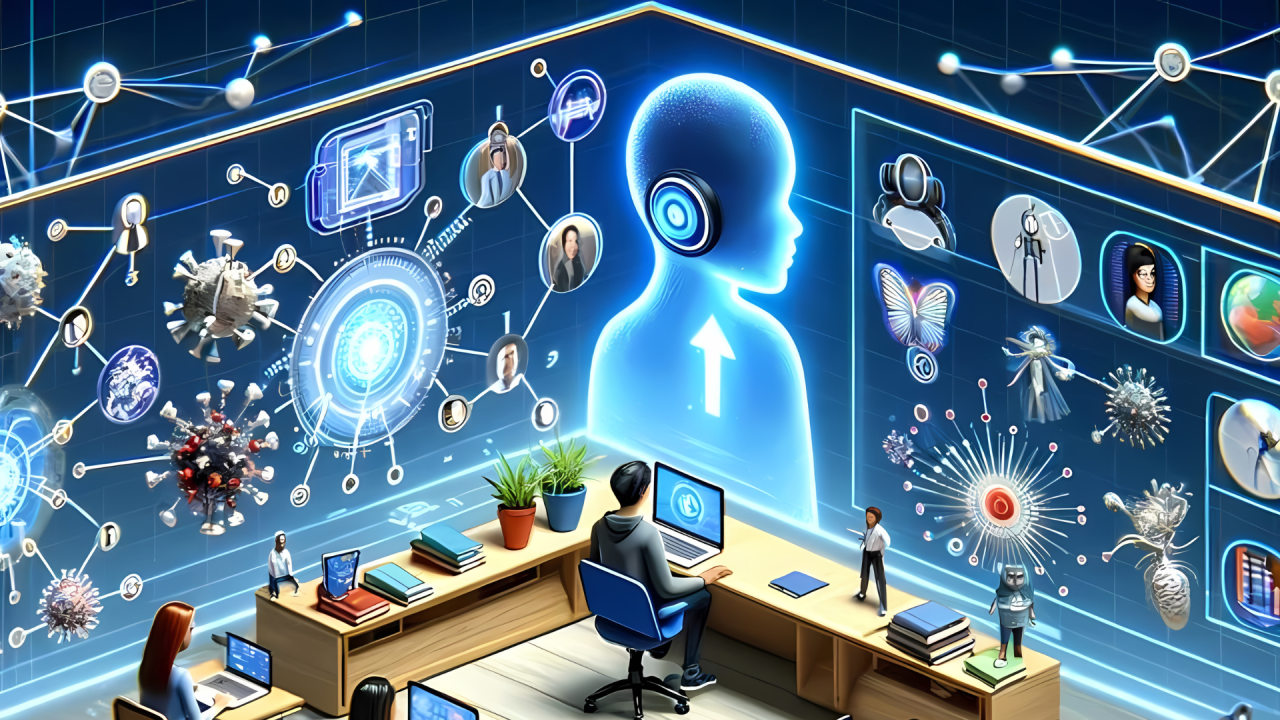
The engineer became an orchestrator of intelligence.
The Seventh Generation: The AI-Native Engineer
This is where we are today.
AI is no longer simply another tool.
It is becoming an engineering partner.
An AI-Native Engineer uses Artificial Intelligence throughout the entire software lifecycle.
AI assists with:
- Architecture brainstorming
- Code generation
- Documentation
- Testing
- Security analysis
- Database design
- API development
- Deployment
- Monitoring
- Optimization
The engineer remains responsible for judgment, quality, ethics, and system design.
AI accelerates execution.
It does not replace engineering thinking.
Why Coding Alone Is No Longer Enough
Many students still ask:
Which programming language should I learn?
It is an understandable question—but increasingly the wrong one.
Programming languages evolve.
Frameworks change.
Libraries become obsolete.
The most valuable engineers build transferable capabilities.
These include:
- Systems thinking
- Problem solving
- Communication
- Architecture
- Data literacy
- Business understanding
- Security awareness
- AI fluency
- Continuous learning
Technology changes rapidly.
These capabilities remain valuable throughout an entire career.
The Rise of the Multi-Disciplinary Engineer
The future belongs to engineers who comfortably work across disciplines.
Consider a modern AI project.
It may require knowledge of:
- Python
- SQL
- Cloud infrastructure
- APIs
- Authentication
- Databases
- Enterprise security
- Prompt engineering
- Vector search
- AI evaluation
- User experience
- Business workflows
No single discipline is sufficient.
Modern engineering is increasingly interdisciplinary.
Where the Forward Deployed Engineer Fits
As AI systems become deeply integrated into organizations, companies need professionals who can bridge multiple worlds.
A Forward Deployed Engineer combines:
- Software Engineering
- AI Engineering
- Enterprise Architecture
- Cloud Computing
- Data Engineering
- Customer Consulting
- Business Analysis
- Solution Design
They do not simply deliver software.
They deliver business outcomes.
That is why this role has become one of the fastest-growing positions in enterprise AI.
The New Competitive Advantage
Twenty years ago, companies competed on software.
Today they compete on intelligence.
Tomorrow they will compete on how effectively humans and AI collaborate.
Organizations that combine:
- Skilled engineers
- High-quality data
- Responsible AI
- Strong leadership
- Continuous innovation
will consistently outperform those that rely on technology alone.
The engineer becomes one of the key drivers of organizational transformation.
Lessons for Students
If you are beginning your journey today, do not measure success by how many programming languages you know.
Instead, ask yourself:
- Can I solve meaningful problems?
- Can I understand business needs?
- Can I design reliable systems?
- Can I work effectively with AI?
- Can I communicate technical ideas clearly?
- Can I continue learning as technology evolves?
These questions will shape your career far more than any individual programming language.
Looking Ahead
The evolution of engineering is far from over.
The next decade will likely introduce technologies that do not yet exist.
However, one principle will remain constant:
The engineers who thrive will be those who continuously adapt, think critically, collaborate effectively, and focus on solving real-world problems.
Artificial Intelligence is changing how software is built.
It is not changing why software is built.
Technology exists to improve people’s lives, empower organizations, and solve meaningful challenges.
That purpose remains unchanged.
What’s Next?
In the next article, we will answer one of the most important questions in modern technology:
What Does a Forward Deployed Engineer Actually Do?
We will explore the daily responsibilities, required skills, real industry projects, and why companies are investing heavily in this emerging role.
From theory, we now move into practice.
Welcome to the next step of the journey.
Leave a Reply
You must be logged in to post a comment.