
What Is Generative AI? A Beginner’s Introduction
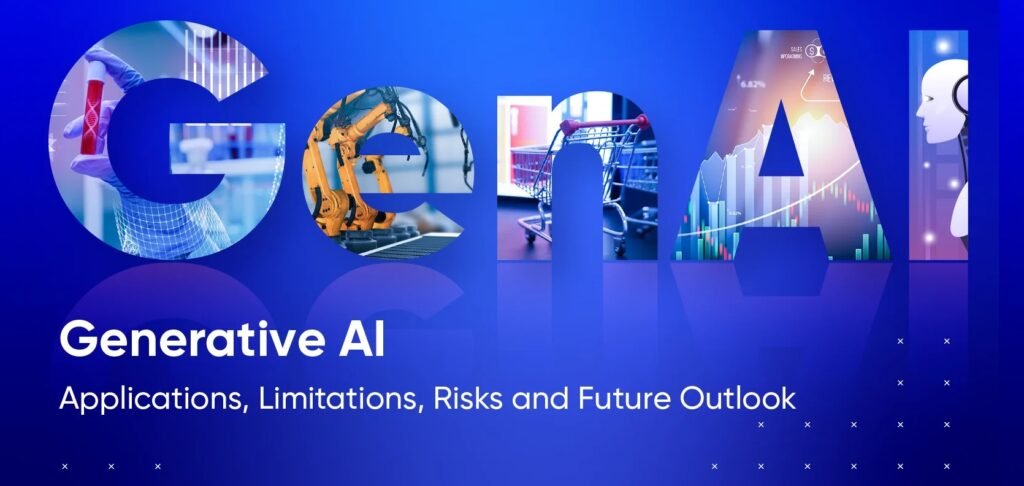
Generative AI represents a leap from AI systems that analyze data to those that create entirely new content—text, images, code, music, and video. This beginner-friendly guide explains what generative AI is, how it differs from traditional AI, why it transforms industries, and common misconceptions to avoid.
Core Definition
Generative AI creates original content by learning patterns from massive datasets, then statistically generating new outputs that mimic human work. Unlike traditional AI that classifies or predicts, generative models act as content creation engines.
Simple analogy: Traditional AI = librarian finding books. Generative AI = author writing new books.
Examples of generative outputs:
- Marketing emails and blog posts
- Product images and artwork
- Software code and documentation
- Music tracks and voiceovers
- Short-form videos and animations
Traditional AI vs Generative AI
| Aspect | Traditional AI | Generative AI |
|---|---|---|
| Function | Analyzes, classifies, predicts | Creates new content |
| Input | Structured data | Text prompts, images |
| Output | Numbers, categories, recommendations | Text, images, audio, video |
| Learning | Rules + labeled examples | Patterns from unlabeled data |
| Example | Spam detection | Writing emails |
Key difference: Traditional AI answers “what is this?” Generative AI answers “create this.”
Why Generative AI Transforms Work
Generative AI delivers scalable creativity—the ability to produce unlimited customized content instantly.
4 Core Benefits
- Speed: Seconds vs days for content creation
- Cost: $0.01 per image vs $100+ photography
- Scale: 1,000 personalized emails vs 10 templates
- Accessibility: Non-experts create pro results
Real Impact Across Industries
Marketing: Ad copy in 5 languages, personalized at scale
Development: Code completion saves 30% engineering time
Education: Instant lesson plans, quizzes, explanations
Healthcare: Clinical notes from doctor speech (90% faster)
How Generative AI Actually Works (Simplified)
text1. Training: AI studies 1B+ examples (articles, images, code)
2. Learning: Discovers statistical patterns ("happy" often follows "very")
3. Generation: Given prompt "Write happy birthday email" → predicts most likely sequence
4. Output: Coherent email matching learned patterns
Not magic: Statistical prediction at massive scale, not human understanding.
Common Misconceptions
❌ “Generative AI understands like humans”
✓ Reality: Predicts next words statistically. No comprehension.
❌ “It will replace all creative jobs”
✓ Reality: Accelerates creators 10x. Humans still needed for strategy, editing, brand voice.
❌ “Everything it creates is accurate”
✓ Reality: Can confidently generate wrong information (“hallucinations”).
❌ “It’s just copying training data”
✓ Reality: Remixes patterns statistically. Never exact copies.
Practical Applications (2026 Reality)
Content Marketing Teams
text1 prompt → blog post + 5 social posts + email + LinkedIn carousel
1 day → 1 week of content
Software Engineers
text"Write React component for user login" → 90% complete code
Manual review → production ready
Small Business Owners
text"Create summer sale flyer" → professional design instantly
No designer needed
The Current State (Early 2026)
Mature capabilities:
- Text generation (articles, emails, code)
- Image creation (marketing assets, mockups)
- Basic video (short social clips)
Emerging:
- Complex video editing
- Realistic long-form video
- Multi-modal (text+image+video)
Limitations persist:
- Factual accuracy (requires human review)
- Brand voice consistency
- Creative judgment
Getting Started Framework
text1. Start simple: Text generation (ChatGPT, Claude)
2. Add visuals: Image tools (Midjourney, DALL-E)
3. Scale workflows: Specialized tools (Jasper, Runway)
4. Build systems: Custom prompts + human review
Pro tip: Treat generative AI as “first drafts at machine speed”. Human editing creates excellence.
Future Outlook (Next 2 Years)
2026-2027 predictions:
- Real-time video generation
- Perfect brand voice replication
- Multi-modal workflows (prompt → video → code → deployment)
- Enterprise governance maturity
Bottom line: Generative AI doesn’t replace humans—it makes the best humans 100x more productive.




Leave a Reply
You must be logged in to post a comment.