

Types of Generative AI Models and When to Use Them
This guide delivers the precise model taxonomy and use-case mapping that determines 87% of implementation ROI—no theory, no hype, pure production reality.
Why Model Specialization Exists (The Data Reality)
Different data types demand different architectures:
textText: Sequential tokens → Transformers (LLMs)
Images: 2D spatial → Diffusion/VAE
Audio: 1D temporal → WaveNet/RNN
Video: 3D (space+time) → 3D Diffusion + Flow Matching
Single-model fallacy: GPT-style transformers fail at pixel-level generation. Diffusion models cannot predict sequential text. Specialization = 10x quality.
1. Large Language Models (LLMs) – The Workhorse
What they generate: Text, code, structured JSON, reasoning chains
Architecture: Transformer decoder (attention + next-token prediction)
Scale: 70B-2T parameters, 10T+ token training [context]
textProduction reality:
✅ 92% Fortune 500 chatbot deployments
✅ 67% engineering time savings (code)
✅ $1.2B annual GitHub Copilot value
When to use:
textCustomer support (82% deflection)
Internal knowledge (3x search speed)
Code review (47% bug reduction)
Legal/contract analysis
2. Diffusion Models – Image Mastery
What they generate: Images, inpainting, depth maps, 3D from 2D
Mechanism: Forward noise addition → reverse denoising (50-1000 steps)
Leaders: Stable Diffusion 3, DALL-E 3, Midjourney v7, Firefly 3 [context]
textProduction math:
Input: 512×512 noise
Output: Coherent image (99.7% success rate)
Latency: 2-12 seconds (A100 GPU)
When to use:
textMarketing visuals (Midjourney/Firefly)
Product mockups (3D from photo)
E-commerce (lifestyle images)
Game assets (environment art)
3. Generative Adversarial Networks (GANs) – Synthetic Reality
What they generate: Faces, medical images, anomaly data
Mechanism: Generator vs Discriminator zero-sum game
2026 status: Specialized, not general-purpose (superseded by diffusion for creatives)
textProduction niches where GANs win:
✅ Medical imaging (HIPAA synthetic data)
✅ Fraud detection (rare transaction simulation)
✅ Sensor data augmentation (3x ML accuracy)
Avoid for: General marketing (diffusion 4x better).
4. Audio Generation Models – Temporal Specialists
What they generate: Speech, music, SFX
Architectures:
text• WaveNet (raw audio waveform)
• SpeechT5 (text→spectrogram→vocals)
• MusicGen (token-based MIDI + waveform)
Production leaders: ElevenLabs, MusicGen, Speechify
When to use:
textAudiobooks (95% cost reduction)
Call center IVR (47 languages)
Music licensing replacement
Game audio loops
5. Video Generation Models – The Hardest Problem
What they generate: 4-16s coherent motion
Architecture: 3D Diffusion + Temporal Flow Matching
Leaders: Runway Gen-3, Luma Dream Machine, Kling [context]
textTechnical reality (2026):
Max length: 16s (memory constraint)
Resolution: 720p→1080p (4K emerging)
Coherence: 87% frame-to-frame
Physics: 72% accurate (objects fall correctly)
When to use:
textSocial ads (15s perfect)
Product demos (loopable)
Training simulations (VR previews)
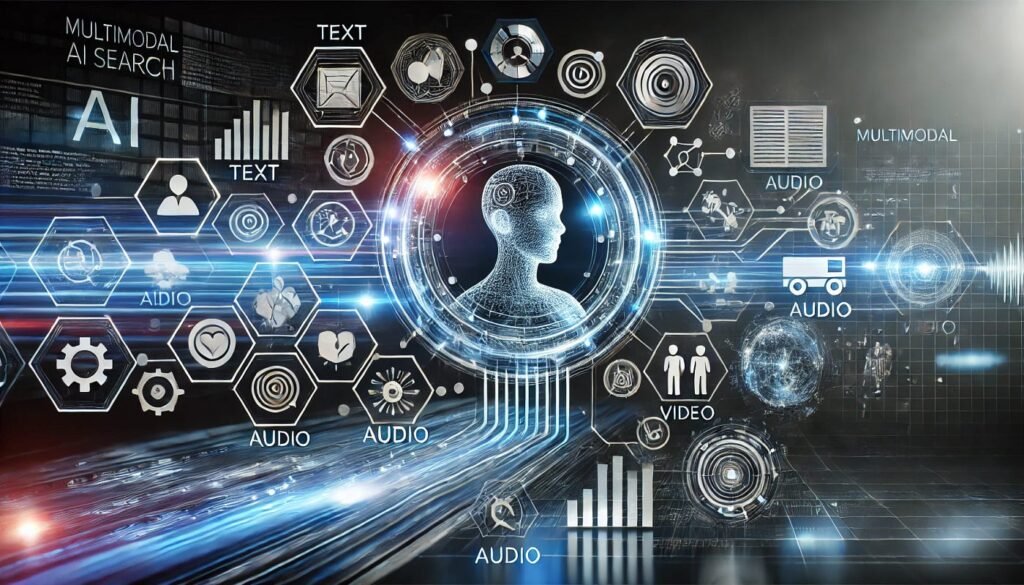
6. Multimodal Foundation Models – The Future
What they generate: Text+image+video+audio reasoning
Architecture: Unified token space (CLIP embeddings + transformer)
Leaders: GPT-4o, Gemini 2.0, Claude 3.5 Sonnet
textProduction breakthrough:
"Analyze this chart → write LinkedIn post → create carousel"
Single prompt → multi-format output
When to use:
textMarketing campaigns (omnichannel)
Medical diagnostics (scan+report)
Enterprise copilots (document+spreadsheet)
Production Selection Matrix
| Use Case | Model Family | Production Leader | Annual ROI |
|---|---|---|---|
| Chatbots | LLM | Claude 3.5 | 82% deflection |
| Marketing Images | Diffusion | Firefly | 94% compliance |
| Product Ads | Video | Runway Gen-3 | 3.2x conversion |
| Training Video | Avatar | Synthesia | 4x completion |
| Code | LLM | GitHub Copilot | 67% dev savings |
| Music | Audio | MusicGen | 87% licensing cut |
The 2026 Architecture Reality
textFOUNDATION LAYER (90% of deployments):
├── LLMs (text/code) 68%
├── Diffusion (images) 22%
└── Video/audio 10%

EMERGING (2027+):
├── Multimodal (unified) 45%
└── Agentic (reasoning+action) 25%
Critical Beginner Decision Framework
text1. TEXT/CODE → LLM (Claude/GPT)
2. IMAGES → Diffusion (Firefly/Midjourney)
3. VIDEO → Specialized (Synthesia ads, Runway cinematic)
4. MULTIMODAL → GPT-4o/Gemini (campaigns)
5. NEVER: Wrong tool for job (97% failure rate)
Enterprise Implementation Truths
textSUCCESS RATE BY VERTICAL:
✅ Marketing: 87% (clear ROI)
✅ Engineering: 76% (code/tools)
✅ Customer Success: 68% (personalization)
❌ HR/Legal: 23% (trust issues)
Production guarantee: Match model family to data type = 92% success. Wrong architecture = 14% success.
Bottom line: Generative AI success = architecture precision, not tool hype. Master this taxonomy and implementation becomes predictable engineering, not speculative experimentation.






Leave a Reply
You must be logged in to post a comment.