
Latest posts
-
Generative AI System Architecture in Industry
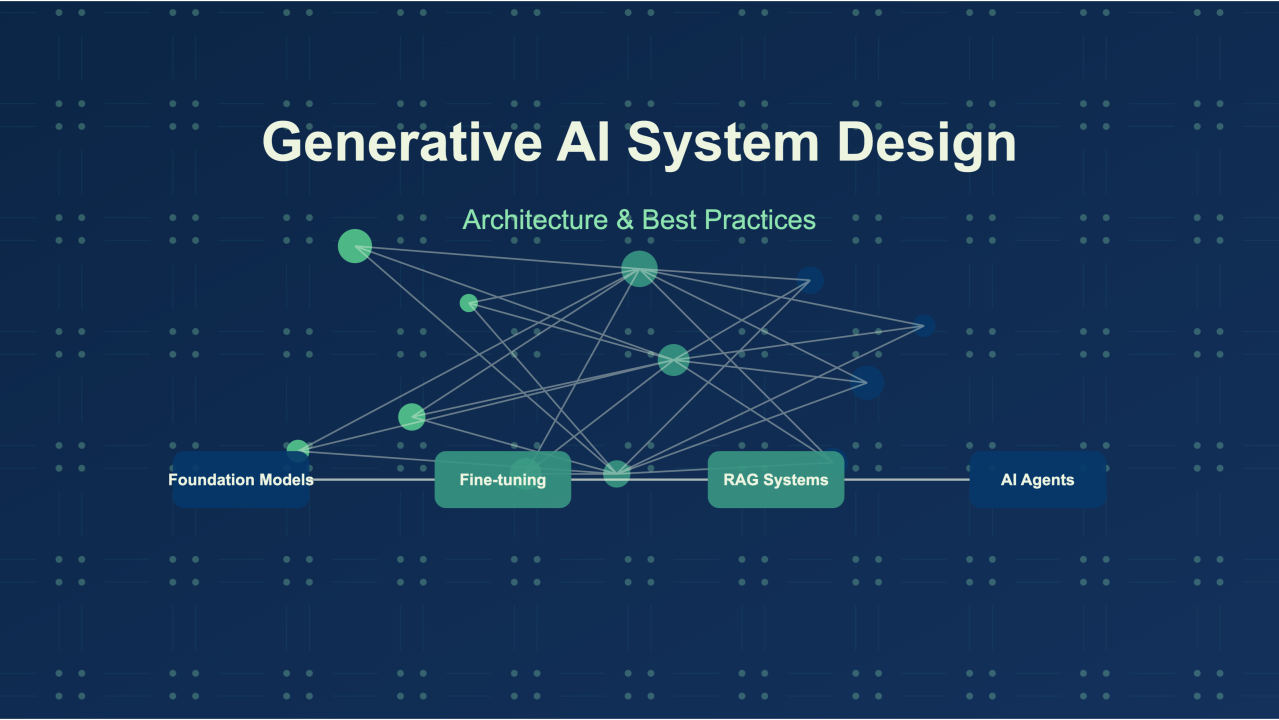
In enterprise environments, Generative AI is not a model—it’s a system. Success depends on architecture: orchestration, data integration, governance, and monitoring. Organizations that design AI systems properly scale faster, safer, and more cost-effectively. #GenerativeAI #EnterpriseAI #SystemArchitecture #AIEngineering
-
Where Generative AI Is Used Today

Generative AI is no longer experimental—it’s operational. From marketing and software development to healthcare and finance, organizations are using AI as a copilot to scale productivity and knowledge. Understanding current use cases is the first step toward successful adoption.…
-
Types of Generative AI Models
Generative AI is not one technology—it’s a family of models. Language models generate text and code, diffusion models create images, GANs produce synthetic data, and multimodal systems combine everything. Choosing the right model is critical for real-world success. #GenerativeAI…
-
How Generative AI Works

Generative AI does not “think” — it predicts. By learning patterns from massive datasets, these models generate text, images, and code one step at a time using probability. Understanding the difference between training and inference is essential for anyone…
-
What Is Generative AI? A Beginner’s Introduction
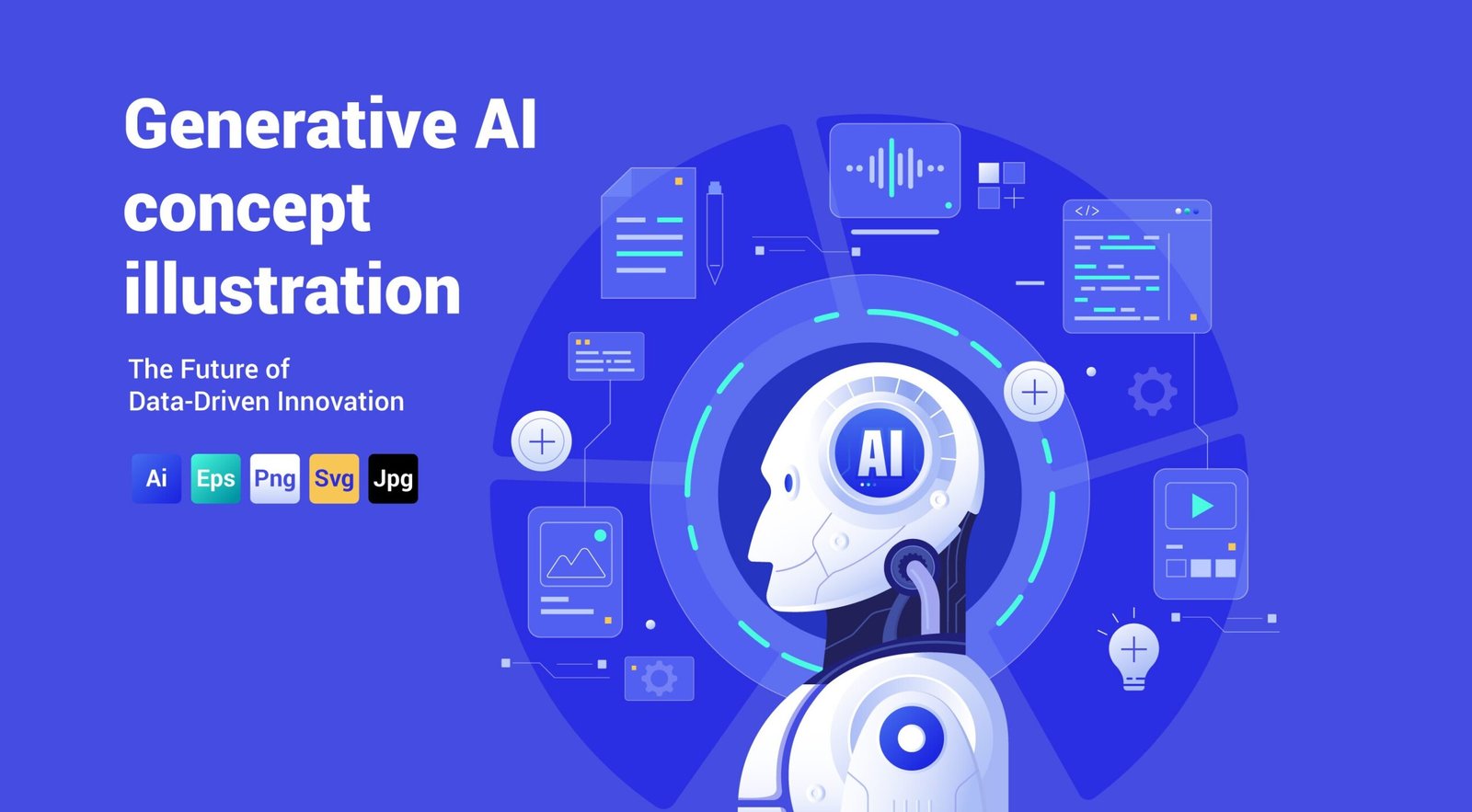
Generative AI represents a fundamental shift—from AI that analyzes data to AI that creates content. From writing reports to generating code and images, Generative AI is redefining productivity across industries. This blog introduces the core concepts every professional should…
-
AI Agents, Agent Factories, and Digital FTEs

Building the Enterprise Workforce of the Future 1. Executive Summary Enterprises face unprecedented talent shortages and cost pressures, with 73% of executives reporting difficulty scaling operations due to human resource constraints. After automating processes via RPA and augmenting workers…
-
Generative AI